

Kidney Disease Education Articles
Most Popular Articles

Stage 5 of Chronic Kidney Disease
A person with stage 5 chronic kidney disease has end stage renal disease (ESRD) with a glomerular filtration rate (GFR) of 15 ml/min or less. At this advanced stage of kidney disease, the kidneys have lost nearly all their ability to do their job effectively, and eventually dialysis or a kidney transplant is needed to live.
Read Article
Understanding Your Lab Work
When you have chronic kidney disease (CKD), your lab work can help you and your health care team understand what’s going on inside your body and whether your treatment plan is working as well as it should.
Read Article
What is creatinine?
A rise in creatinine is one of many factors that can indicate kidney damage or kidney disease. Learn more about this chemical waste product.
Read ArticleKidney Disease Basics Articles
-

Kidney Disease Basics
Being diagnosed with chronic kidney disease (CKD) can be overwhelming. Understanding your kidney disease, or renal disease, is the first step in taking control of your health.
-
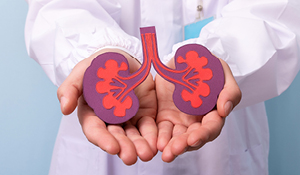
Overview About Kidneys
Kidneys are truly impressive. The more you learn, the more you’ll understand why you want to keep them healthy.
-

What’s It Like to Live With One Kidney?
Most people have two kidneys, but some only have one. Learn more about how the body can function with just one kidney.
-

How to Slow the Progression of CKD
There are many ways to help delay kidney failure, especially when chronic kidney disease (CKD) is diagnosed in the earlier stages.
-

What Is End Stage Kidney Disease
End stage kidney disease (ESKD) is the last stage (stage five) of chronic kidney disease (CKD). This means kidneys are only functioning at 10 to 15 percent of their normal capacity.
-

Understanding Chronic Kidney Disease (CKD)
Chronic kidney disease (CKD) is the gradual loss of the kidneys’ ability to filter waste from the blood. It’s often a result of a kidney disease.
-

What Is Kidney Failure?
Kidney disease comes in five stages. Stage 5 (also known as end stage renal disease, or ESRD) is when kidneys function below 10 to 15 percent of their normal capacity. This essentially is known as kidney failure.
Symptoms and Diagnosis Articles
-

Symptoms of Kidney Disease
Is your body telling you something? Learn the signs and symptoms of chronic kidney disease (CKD).
-
Understanding Your Labwork
When you have CKD, your lab work can help you and your health care team understand what’s going on inside your body and whether your treatment plan is working as well as it should.
-

Hair, Nails and Chronic Kidney Disease
When you look your best, you will likely feel your best. But sometimes conditions such as chronic kidney disease (CKD) can get in the way of that feeling.
-

Inflammation and Chronic Kidney Disease
Learn why inflammation can occur with chronic kidney disease, and how to prevent or treat it.
-

Eyes and Chronic Kidney Disease
Diabetes and high blood pressure aren’t only the leading causes of chronic kidney disease (CKD). They’re also the leading causes of eye disease and loss of vision.
-

Restless Leg Syndrome and Chronic Kidney Disease
Restless leg syndrome (RLS) can disturb your sleep. If you have chronic kidney disease (CKD), it can also disrupt your dialysis time.
-

Kidney Stones and Chronic Kidney Disease
Kidney stones are a formation of hardened minerals in the kidneys or urinary system. In most cases, kidney stones are formed because of a decrease in urine volume or increase in the minerals that form the stones in the urine.
-

Dental Health for People with Kidney Disease
Good dental health isn’t just about preventing cavities and keeping your gums healthy. Both tooth decay and gum disease can lead to infections that can cause problems for people with kidney disease and those who have diabetes.
Risk Factors Articles
-

Diabetes and Minorities: What Are the Risks?
Minority groups such as African Americans, Hispanics, Native Americans, Asians and Pacific Islanders have a higher risk of developing certain conditions.
-

Proteinuria
Proteinuria occurs when an abnormal amount of protein is present in the urine. Learn the symptoms to watch for.
-

What’s Your Blood Pressure?
After diabetes, high blood pressure (also called hypertension) is the second leading cause of chronic kidney disease (CKD) and end stage renal disease (ESRD) in the U.S.
-

Diabetes Is the Leading Cause of Chronic Kidney Disease
According to the Centers for Disease Control, over 17 million Americans have diabetes. Unfortunately, one-third does not realize they have the disease.
-

Risk Factors
About 30 million adults in the U.S. have kidney disease (also called renal disease) and many don’t know it. Do you know the causes of kidney disease and if you’re at risk?
-

Inflammation Diseases of the Kidneys
Nephritis, or inflammation of the kidney, can be caused by infections, autoimmune disorders and toxins in the body.
-

Women’s Health Risks and Chronic Kidney Disease
Chronic kidney disease (CKD) is on the rise. One population group that has seen an increase in occurrences of kidney failure is women who are older (50+ years old) and African American.
-

Smoking and Chronic Kidney Disease
For many decades, the U.S. Surgeon General has warned Americans about the ill effects from smoking. According to the Centers for Disease Control and Prevention, smoking harms nearly every organ of the body.
Stages of Kidney Disease Articles
Related Diseases Articles
-

Anemia and Chronic Kidney Disease
Anemia happens when your body is not making enough red blood cells. Red blood cells carry oxygen to all the cells in the body.
-

Polycystic Kidney Disease
Normal kidneys are about the size of a closed fist. Polycystic kidneys have cysts that form in the kidneys.
-

High Blood Sugar and Chronic Kidney Disease
Diabetes is the most common cause of kidney failure in the United States.
-

Chronic Kidney Disease and Your Heart
According to the Center for Disease Control (CDC), heart disease is the leading cause of death in the United States.
-

Fabry Disease
Fabry disease (also called Anderson-Fabry disease, AFD or Fabry’s disease) is a rare genetic condition that was discovered a century ago.
-

Anemia Management and Chronic Kidney Disease
Usually anemia begins in the early stages of chronic kidney disease and gets worse as kidney function decreases.
-

Diabetes: Definition, Causes and Symptoms
Diabetes is a disease that affects your body’s ability to produce or use insulin. Insulin is a hormone. When your body turns the food you eat into energy (also called sugar or glucose), insulin is released to help transport this energy to the cells.
-

Blood Glucose Monitoring for People with Diabetes
You’ll want to know how well you’re taking care of your diabetes and monitoring blood glucose is an important step in doing so.